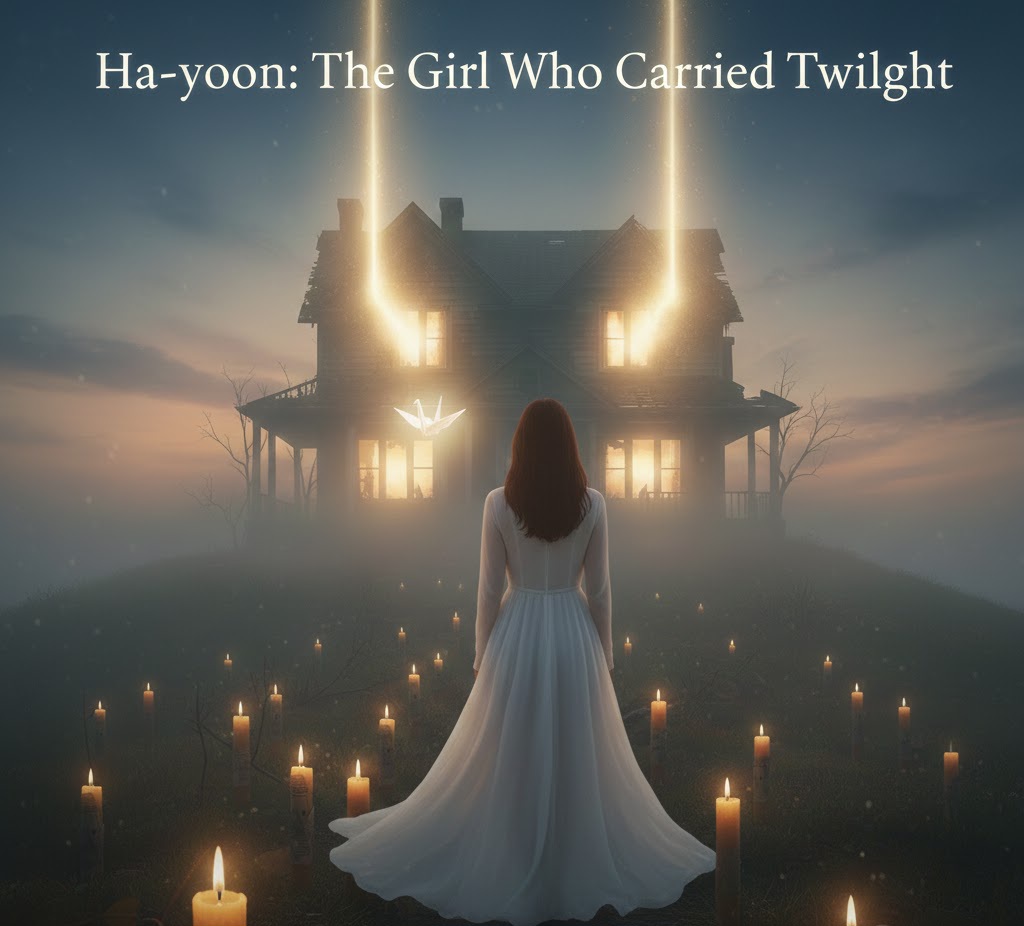
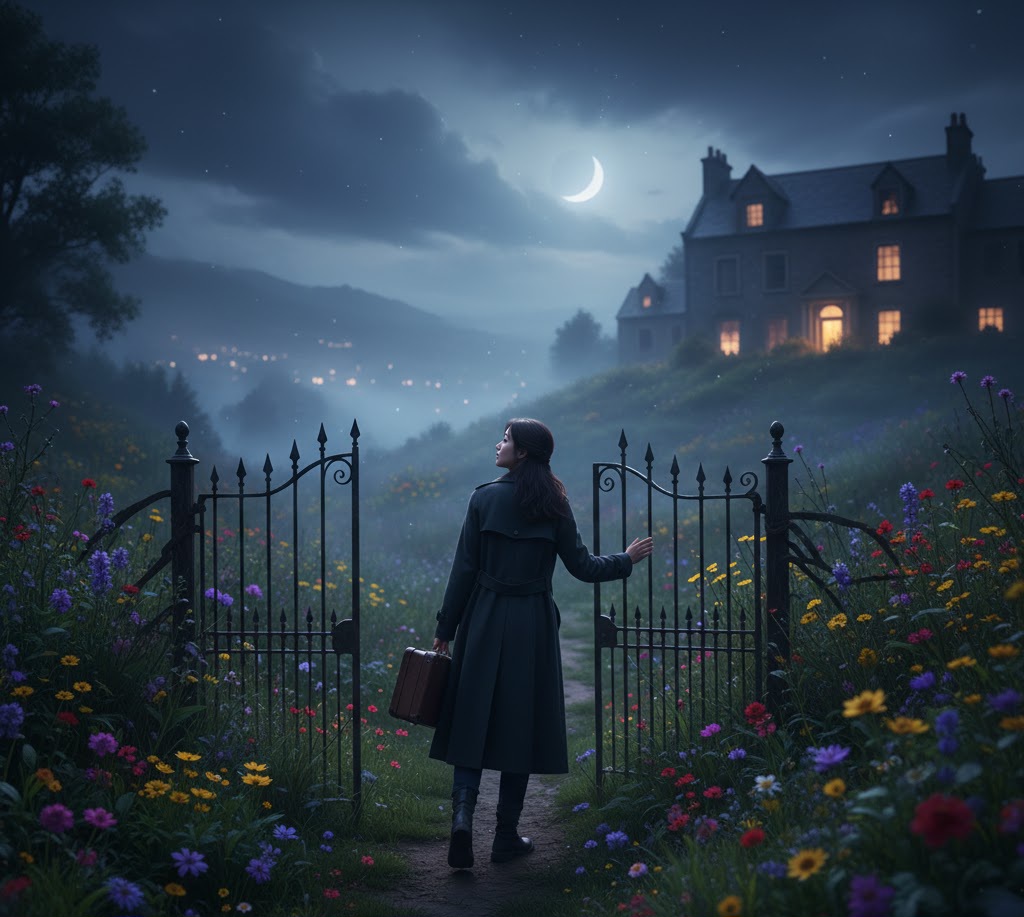
Written by:Kavitha.V --- Ha-yoon: The Girl Who Carried Twilight The villagers said the house on the hill still glowed after midnight — a faint, golden shimmer visible through broken windows, though no one had lived there in years. Some claimed it was a ghost. Others whispered it was a memory refusing to fade. Whatever it was, the house remained an anomaly in the fog-draped valley, a silent reminder of the family who had vanished into their own secrets. On a misty evening, Ha-yoon returned. The valley was thick with fog, the air sharp with the smell of wet soil and fallen leaves after the rain. Her suitcase was light, but her heart carried the weight of every word she had been too afraid to speak. When the old house finally appeared through the mist, her breath caught — it looked smaller, lonelier, almost as if time had forgotten to take care of it. The iron gate groaned when she pushed it open. The once-manicured garden had surrendered to wilderness — tall grass, stubborn weeds, and wildflowers growing where they pleased. Even the air felt alive, humming with faint echoes of laughter and whispers that no longer existed. Inside, the house waited. Still, silent, yet strangely awake. Dust lay thick over everything: the grandfather clock that had stopped on the night her father left, the faded photographs whose faces were now unrecognizable, and the upright piano that once filled evenings with her mother’s soft lullabies. A pale ring on the wooden table — the burn mark of a candle — stood out like a quiet question.
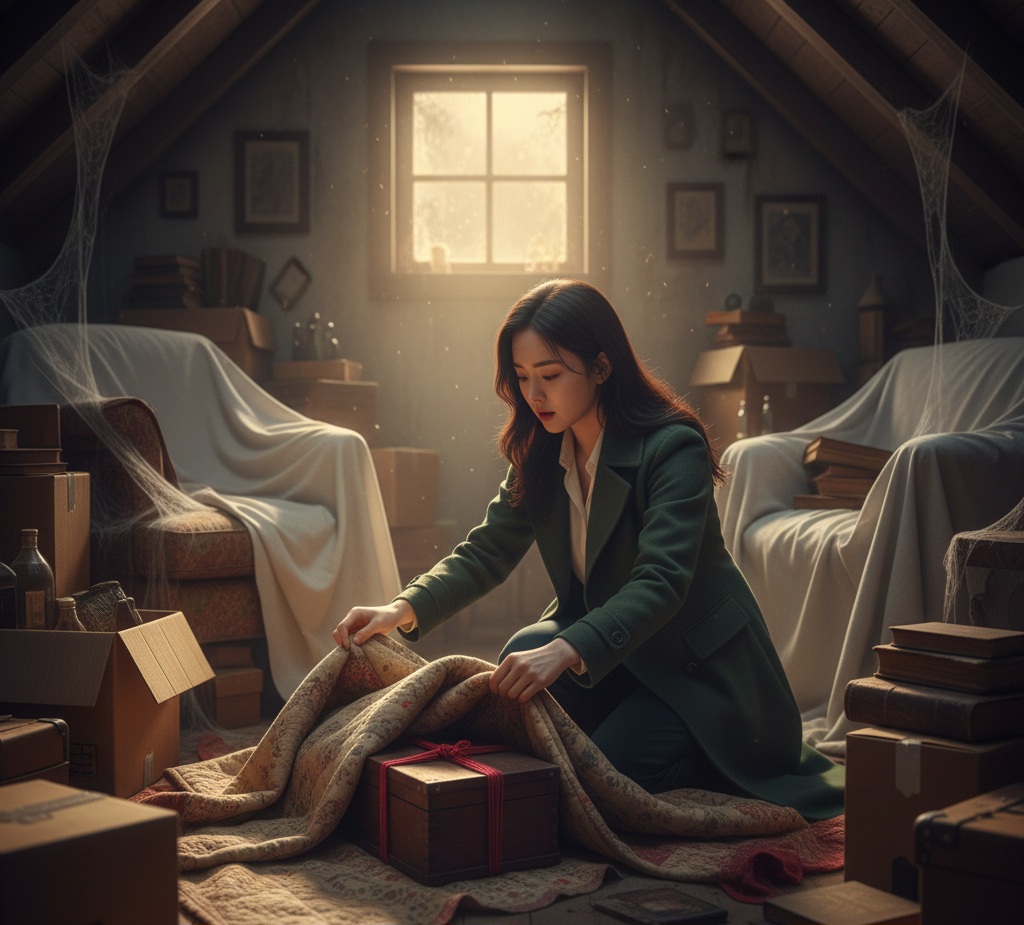
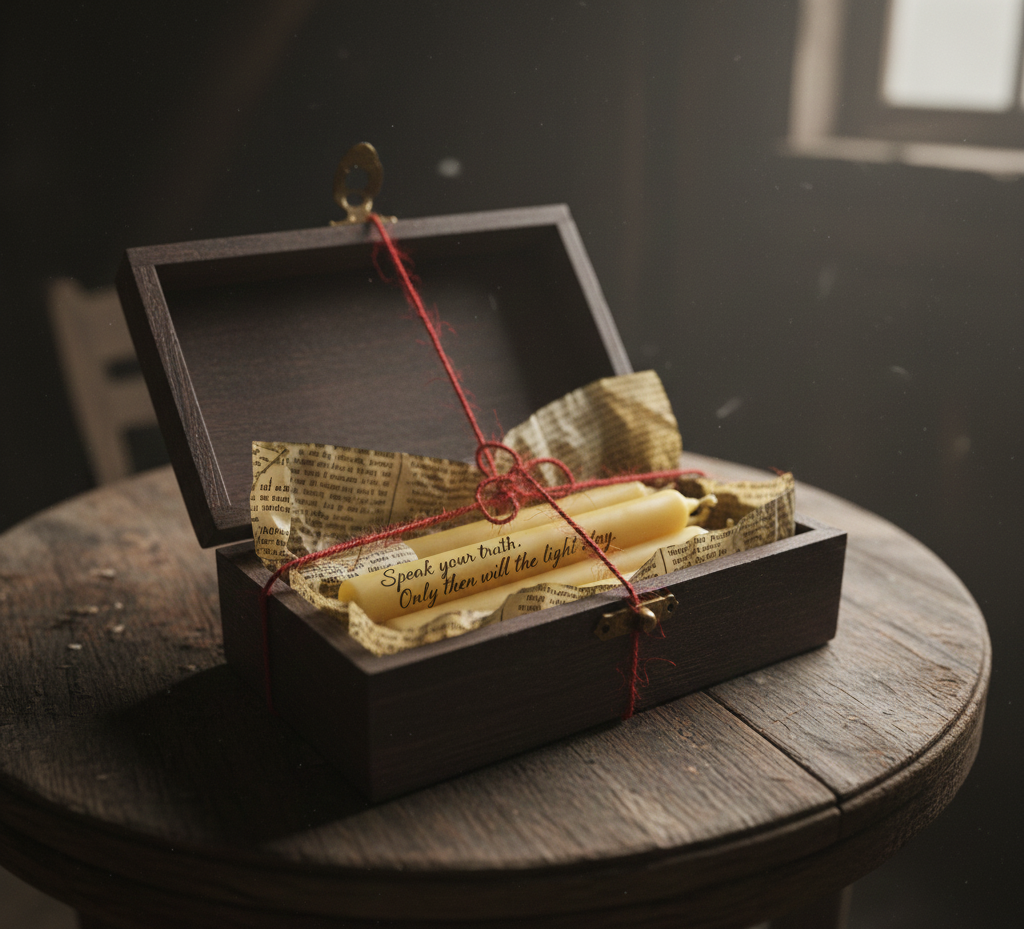
Ha-yoon’s pulse quickened. She knew what it meant. In the attic, buried beneath a pile of moth-eaten quilts, she found the object she had come for: a small, dark wooden box tied with red thread. Inside were twelve beeswax candles, each wrapped in brittle, yellowed newspaper. On the first candle, in her grandmother’s delicate handwriting, were the words: “Speak your truth. Only then will the light stay.” Her grandmother had always said that unspoken truths become shadows — and only truthborn light could chase them away. Ha-yoon carried the box downstairs and placed the candles gently throughout the house — one for each room, one for each silence she had carried alone. But the twelfth candle was different. Her grandmother had warned her years ago, whispering, “The other eleven cleanse the heart. But this one carries the truth you fear most — the one that broke you. Never touch that wick.” That night, a powerful storm rolled across the mountains. Wind pressed against the trembling windows, carrying long, moaning notes that sounded like forgotten songs. Sitting on the dusty floor, Ha-yoon lit the first candle. “I miss you, Dad,” she whispered. “I miss your humming when it rained.” The flame flickered, then steadied — as if offering comfort.
She lit the second candle. “I forgive you, Mom. I wish you had stayed long enough to hear it.” The flame glowed warmer, brighter. And when she confessed to the friend she had wronged, a crooked photograph on the wall straightened itself with a soft click. One by one, she spoke her truths — about the boy who never returned, the dreams she buried, the guilt she carried. When she whispered, “It was easier to be sad than to hope again,” the dust cloth over the piano trembled, acknowledging her pain. With every confession, the air warmed. The house began to glow — not from moonlight, but from something alive within its walls. The storm softened outside, as though listening closely. Only the twelfth candle remained. Ha-yoon hesitated, the match trembling. The silence felt thick with old shadows. But the light of the other eleven candles wrapped around her like newfound courage. “I’m not afraid anymore,” she whispered. “I want to remember who I was before the silence.” She lit the final candle.
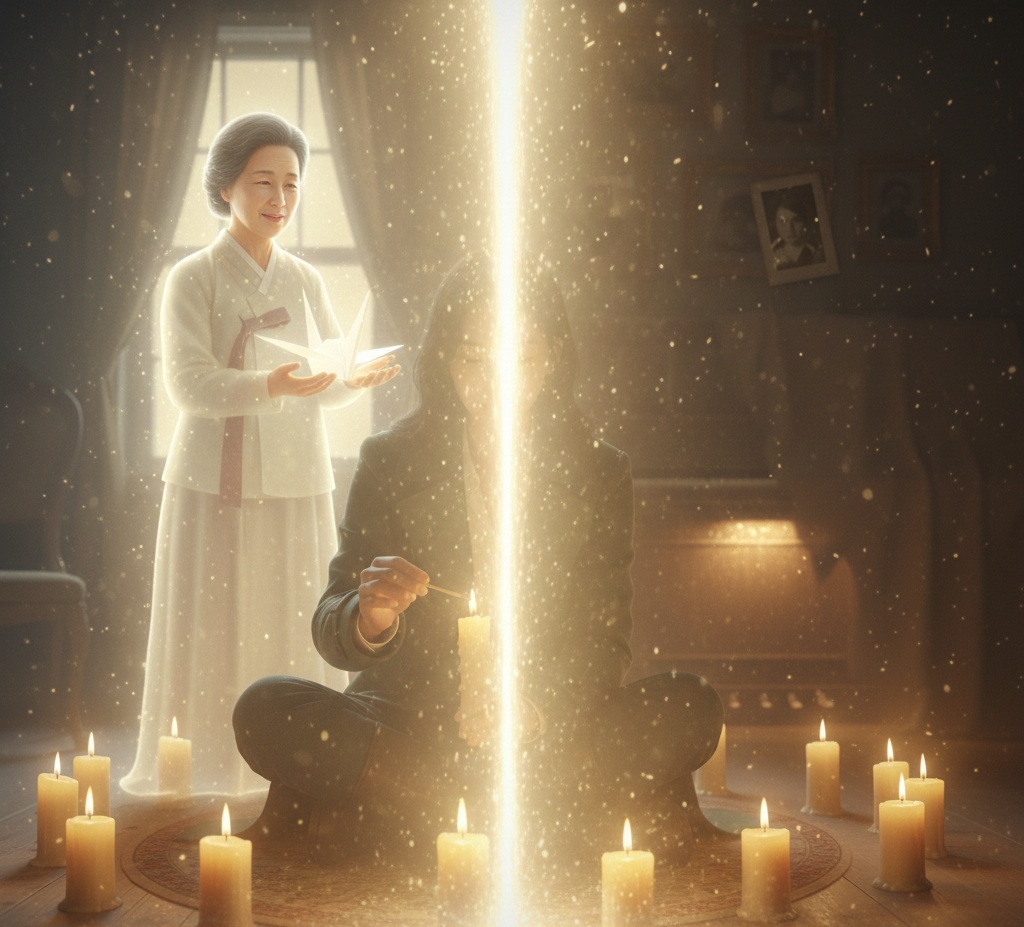
The flame erupted into a column of golden-white light. The air shimmered. The walls brightened. And for a breathless moment, Ha-yoon saw her grandmother standing by the window, smiling softly, holding a paper crane made of radiant white parchment. Then she vanished like morning fog. The crane lay quietly on the table. Tucked inside its wing was a tiny scroll in her grandmother’s handwriting: “Twilight isn’t the end, my child. It’s where the heart learns to begin.” By dawn, the storm had passed. The sea below the hill shimmered with newborn light. Ha-yoon stood on the shore, the crane in her hand. “For everything I couldn’t say,” she whispered, releasing it into the wind. It glowed once before disappearing into the horizon. That day, Ha-yoon placed candles at every doorstep in the village. People lit them at twilight, their homes flickering with forgiveness and rediscovered hope. Soon, they called her The Twilight Girl — the one who brought light to forgotten hearts.
And sometimes, on stormy nights, villagers still see a warm glow from the house on the hill. They say it is Ha-yoon — lighting her candles again. ---